Deal
Deal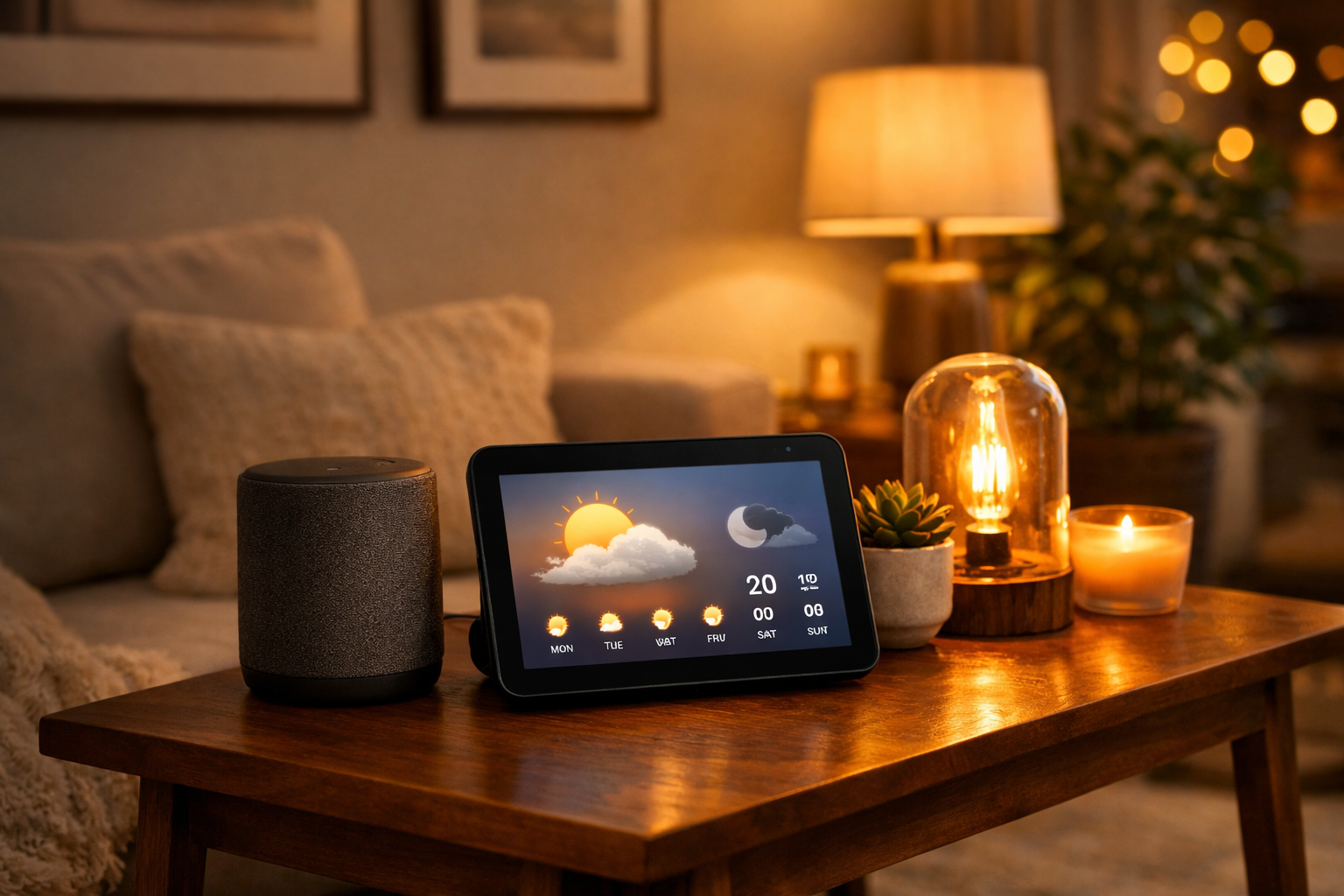
Remember when making your home "smart" meant spending thousands of dollars and hiring someone to wire the whole place? Yeah, that's ancient history. In 2025, you can set up voice-controlled lights, a smart thermostat, security cameras, and a whole entertainment system for what you'd spend on a nice dinner out — if you know what you're doing.
I've been building out my own smart home piece by piece over the last few years, and I've learned a ton about what's worth buying, what's overpriced, and — most importantly — when to buy it. Let me walk you through the whole thing.
Choosing Your Smart Home Ecosystem
Before you buy a single gadget, you need to pick a team. This is the biggest decision you'll make because it determines what plays nice together and what becomes a headache. There are three main players, and they each have their strengths.
Amazon Alexa is the cheapest way in and works with practically everything. Echo speakers drop below $25 during sales all the time, and I'm hard-pressed to find a smart device that doesn't support Alexa. If your budget is tight, this is your best bet.
Google Home has — and I'll die on this hill — the smartest voice assistant of the three. It just understands what you're asking better. If you're on Android and live in the Google world already, the Nest speakers and displays slide right into your life. The Google Home app got a massive overhaul recently too, which made setting up automations way less painful.
Apple HomeKit costs more. No way around that. Devices run about 10 to 20 percent higher than Alexa or Google equivalents. But if your whole family is on iPhones and Macs, the experience is ridiculously smooth. Plus, Apple takes privacy way more seriously than the other two, if that matters to you.
- Best for budget: Amazon Alexa — lowest entry cost and widest compatibility by far
- Best for Android folks: Google Home — better voice recognition and seamless phone integration
- Best for Apple households: HomeKit — polished experience with strong privacy protections
- Best for future-proofing: Matter-compatible devices work across all three, so you're covered no matter what
The Best Entry-Point Devices
Here's my biggest piece of advice: start small. Don't go out and buy 15 devices at once. Grab two or three things that'll make an immediate difference in your daily routine. These are the gadgets that turn skeptics into believers.
A smart speaker or display is your command center. The Echo Dot or Google Nest Mini run under $50 normally and drop to $20-$25 during sales. Want something with a screen? The Echo Show 5 or Nest Hub doubles as a bedside clock, kitchen recipe viewer, and video call device. I keep one on my kitchen counter and use it constantly.
Smart bulbs give you the most immediately satisfying upgrade. Seriously — the first time you say "turn off the lights" from bed and it actually works, you'll get why people are hooked. Wyze, IKEA Tradfri, and Philips Hue Essentials all let you control lights by voice, set schedules, and play with colors. A four-pack runs $20 to $40.
A smart plug is the unsung hero of the smart home. Plug one into your coffee maker, fan, lamp, or space heater, and boom — it's voice-controlled. At $5 to $15 each, these are absurdly good value.
Bundle Deal Strategies That Actually Work
Brands and retailers put together smart home bundles several times a year that blow individual pricing out of the water. Knowing how to spot these — and when they drop — is how you save real money.
Key Tip: Amazon bundles Echo devices with smart plugs, bulbs, and other accessories multiple times a year at 40 to 60 percent off. The absolute best bundle deals show up during Prime Day in July and Black Friday in November. I set deal alerts on Slickdeals and CamelCamelCamel so I never miss these windows. You should too.
Starter kits from Philips Hue, Ring, and Arlo come with a hub (if you need one) and several devices at 20 to 30 percent less than buying each piece separately. These kits take the guesswork out of compatibility and make setup a breeze.
Keep an eye out for cross-brand promos too. I've seen retailers throw in a free smart speaker when you buy a thermostat or security camera, which basically knocks $30 to $50 off your total.
Seasonal Sale Timing for Smart Home Gear
Smart home stuff follows really predictable price patterns throughout the year. Once you see the pattern, you can plan your buys around the dips.
- January: Post-holiday clearance on last-gen speakers and displays — great for stocking up
- March to April: Spring sales on outdoor gear like cameras, sensors, and smart sprinkler systems
- July: Prime Day is the best time of year for Echo and Ring products — often cheaper than Black Friday
- October: Early Black Friday deals start rolling in; Amazon discounts their own devices hard
- November: Black Friday and Cyber Monday bring the deepest discounts across every brand
- December: Last-minute holiday deals on gift-friendly stuff like smart speakers and plugs
Starter Kit Recommendations by Budget
Here's what you can realistically build at three price points, assuming you shop during a big sale event.
Under $75: The Bare Essentials. One smart speaker (Echo Dot or Nest Mini), a two-pack of smart plugs, and two smart bulbs. That gives you voice control of lights and appliances in a room or two. Sounds modest, but the daily convenience hits you right away.
Under $200: The Comfortable Setup. A smart display (Echo Show 5 or Nest Hub), four smart bulbs, a four-pack of smart plugs, a smart thermostat (Wyze or Amazon's own), and a basic indoor security camera. Now you've got lighting, climate control, and security covered — and the thermostat will start saving you money on energy bills from day one.
Under $400: The Full Smart Home. Everything from the $200 tier plus a video doorbell (Ring or Wyze), outdoor smart lights, a robot vacuum, and extra speakers for multi-room audio. At this point, your home genuinely feels like it's working for you.
Compatibility Tips to Avoid Costly Mistakes
The fastest way to waste money on smart home gear is buying stuff that won't talk to each other. Before every single buy, check these three things.
First, make sure the device works with your ecosystem. Look for "Works with Alexa," "Works with Google Home," or "Works with Apple HomeKit" badges on the product listing. If it doesn't say it, don't assume it.
Second, check if you need a separate hub. Some Zigbee and Z-Wave devices require a dedicated hub to work, and that's an extra $30 to $80 you weren't planning on. Wi-Fi and Bluetooth devices connect straight to your network — no hub needed.
Third, look for Matter support. Matter is a universal standard that lets devices work across all the big platforms. Buying Matter-compatible gear now means you're protected if you ever switch ecosystems down the road.
Budget-Friendly Automation Ideas
The real magic of a smart home isn't voice commands — it's automations that run without you doing anything at all. And the best part? These cost nothing extra once you've got the basic devices set up.
- Morning routine: Lights gradually brighten at your wake-up time while the coffee maker clicks on through a smart plug
- Away mode: Lights cycle on and off randomly when you leave the house, making it look like someone's home
- Energy saver: Smart thermostat adjusts when everyone leaves — we've been saving about 12 percent on our heating bill with this
- Movie time: One voice command dims the lights, turns on the TV, and sets the speaker volume
- Bedtime: All lights off, doors lock, thermostat drops to sleeping temperature, white noise machine kicks on
Key Takeaway
You don't need a fat wallet to build a smart home. Start with a speaker and a few bulbs or plugs, pick the ecosystem that matches your phone and budget, and add on gradually during big sales. By shopping Prime Day and Black Friday, you can put together a fully connected home for 40 to 50 percent less than retail pricing. Go with Matter-compatible devices when you can — that way you're covered no matter what platform you're on today or switch to tomorrow.