Deal
Deal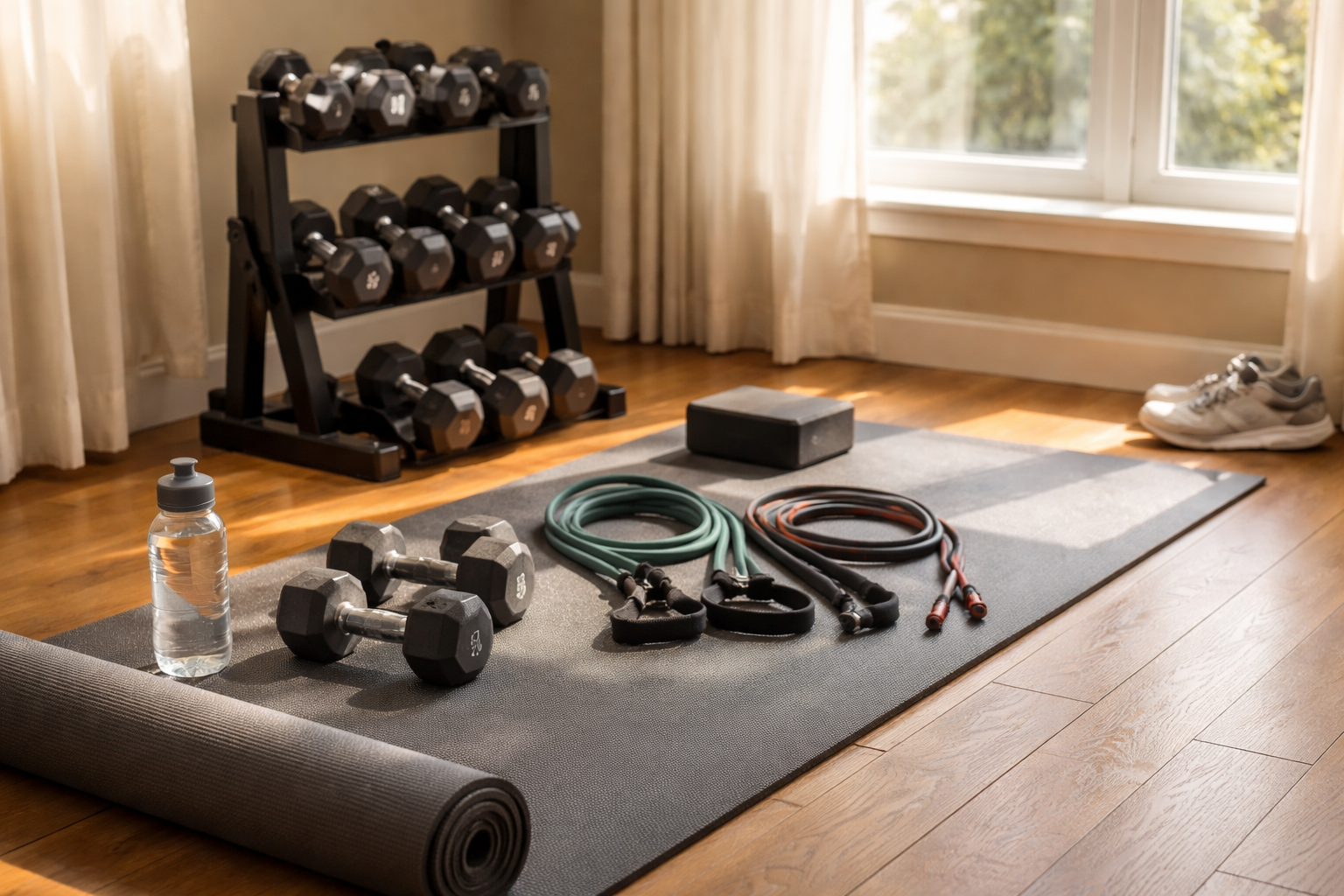
Let me do some quick math for you. A gym membership runs $40 to $60 a month. That's $480 to $720 a year. Over five years? You're looking at up to $3,600 — just for the privilege of using someone else's equipment. I canceled my gym membership three years ago, built a home setup for under $300, and I'm in better shape now than I was paying for the gym.
You don't need a basement or a spare room. You don't need to spend thousands. Here's exactly what to buy at three different budget levels — plus how to find deals that make it even cheaper.
The $100 Budget: Foundation Fitness
A hundred bucks. That's it. And you can build a setup that'll genuinely kick your butt if you use it right.
- Resistance band set ($15 to $25): Looped bands at different resistance levels. They replace light dumbbells and make bodyweight exercises way harder
- Pull-up bar ($20 to $30): Mounts in your doorframe. Dozens of upper body and core exercises in about 3 square feet of space
- Yoga mat ($15 to $20): Cushioning for floor exercises, stretching, abs — all the stuff you'd do on the gym floor
- Jump rope ($8 to $12): Burns 10 to 15 calories per minute. That's more than most cardio machines. And it fits in a drawer
- Kettlebell or adjustable dumbbells ($25 to $35): One 25-to-35-pound kettlebell opens up a whole world of exercises
This all fits in a closet. Pair it with free YouTube workouts and you've got a complete training system. I know people who've gotten into great shape with less than this.
The $300 Budget: The Versatile Home Gym
This is the sweet spot for most people. At $300, you can afford equipment with progressive overload — meaning you can keep increasing the weight as you get stronger. That's the key to long-term results.
- Adjustable dumbbell set ($80 to $120): Something like Yes4All or Bowflex SelectTech. Five to 50 pounds per hand — replaces an entire dumbbell rack
- Flat or adjustable bench ($60 to $100): Opens up bench press, rows, step-ups, seated shoulder press — tons of stuff
- Pull-up bar ($25): Wall-mounted or doorframe for upper body and core
- Resistance band set ($20): Warm-ups, accessory work, and extra resistance on dumbbell movements
- Yoga mat and jump rope ($25): Flexibility and cardio covered
- Ab roller ($10 to $15): Cheap, tiny, and absolutely destroys your core. One of the best $12 I've ever spent
Adjustable dumbbells and a bench give you basically every upper body exercise a commercial gym has. Add bodyweight squats, lunges, and split squats with dumbbells and your legs are covered too.
The $500 Budget: Near-Commercial Capability
Five hundred bucks and you're playing with the big kids. At this level, you can either build on the $300 setup or go a completely different direction with a barbell system.
The biggest upgrade here? An Olympic barbell and weight plate set. Now you can do heavy squats, deadlifts, and overhead presses — the exercises that build real strength. A basic 300-pound Olympic set runs $200 to $250 during sales. Add a squat stand or budget power rack for $100 to $150 and you've got the foundation for any serious strength program.
Smart Investment: If you can only buy one serious piece of equipment, get adjustable dumbbells. No question. They support hundreds of exercises across every muscle group. You don't need a spotter, you don't need a dedicated room, and they last forever.
New vs Used Equipment: Safety Checks That Matter
The used market is a goldmine — especially in February and March. That's when all the New Year's resolution people start selling their barely-touched equipment on Facebook Marketplace and Craigslist. I've seen $500 dumbbell sets go for $200 because someone used them twice and gave up.
But not everything used is a safe buy. Here's what to look for before handing over your cash.
- Weight benches: Check every weld for cracks. Test the adjustments. Sit on it and wobble — if it feels unstable, walk away
- Dumbbells and plates: Iron and steel are basically indestructible. Rubber-coated ones should be checked for peeling or cracking
- Cable machines: Look at every cable for fraying. Test every pulley. Check that weight stacks move smoothly
- Treadmills and ellipticals: Run them for at least 5 minutes. Listen for weird noises, watch the belt tracking, make sure all the electronics work
- Power racks: Check bolt holes for stripping, make sure J-hooks and safety bars seat properly, and look for rust at the joints
Don't buy used resistance bands, yoga mats, or anything with foam padding that looks worn. These items break down with use and they're cheap enough to buy new.
Best Times to Buy Fitness Equipment
Timing your purchase can save you 20 to 50 percent. The equipment market is wildly seasonal.
January is tricky — retailers jack up prices on popular items because resolution buyers will pay anything. But they also run promos on higher-end stuff. The real deals come in late February through April, when resolution demand crashes and stores need to clear inventory.
- Late February to April: Post-resolution clearance. Prices drop as retailers unload overstocked inventory
- Late May to July: Summer sales on home gym gear as people move outdoors
- Black Friday to Cyber Monday: The deepest brand-name discounts from Amazon, Dick's, and Rogue Fitness
- Used market peak: February through April — resolution quitters flood Marketplace and Craigslist with like-new equipment
Space-Efficient Equipment for Small Homes
I built my first home gym in a 10x10 corner of my apartment. It's totally doable. The trick is picking gear that collapses, folds, or does multiple things. A folding bench stands upright in a closet. Adjustable dumbbells replace a whole rack. Resistance bands hang on a door hook. A pull-up bar pops in and out of the doorframe in seconds.
For cardio in tight spaces, a jump rope needs about a 6-by-8-foot area and gives you a better workout than most machines. If you want something mechanical, folding treadmills and compact rowers like the Concept2 RowErg store vertically against a wall.
Versatile Equipment That Replaces Multiple Machines
My whole philosophy on home gym equipment: buy things that do many jobs, not one. Adjustable dumbbells replace a whole weight rack. A TRX suspension trainer gives you hundreds of exercises from a single door anchor. One kettlebell handles strength, cardio, and mobility work.
Skip single-purpose machines like leg extensions or pec decks unless you find them practically free on the used market. They eat up space and only do one or two exercises that dumbbells handle just as well.
Maintenance Tips to Protect Your Investment
Home gym equipment will last decades if you treat it right. Wipe down metal surfaces monthly with a lightly oiled cloth to prevent rust. Tighten bolts on benches and racks every few months — things loosen up over time. If you have a treadmill, lube the belt every 3 to 6 months (check your manual). Keep rubber-coated weights out of direct sunlight or they'll start cracking.
For anything with cables, inspect them monthly for fraying. A cable that snaps under load is genuinely dangerous, and it's 100 percent preventable with a quick visual check.
Key Takeaway
A $300 home gym built around adjustable dumbbells and a bench pays for itself in under 6 months versus a gym membership — and the equipment lasts for years. Shop for deals in late February through April or during Black Friday. Check Facebook Marketplace for barely-used resolution equipment. And always pick versatile tools over single-purpose machines. You don't need a big budget or a dedicated room to get an amazing workout at home.