Deal
DealCar Maintenance on a Budget: Save Money and Extend Your Vehicle's Life
Americans spend over $900 a year on car maintenance and repairs on average. I used to be well above that number. Then I learned to do a few things myself, found a good independent mechanic, and started actually following my car's maintenance schedule instead of guessing. My annual costs dropped by more than half — and my car runs better than it ever did.
The funny thing about car maintenance? Spending a little bit consistently actually saves you a ton compared to ignoring stuff until it breaks. Here's everything I wish someone had told me when I got my first car.
DIY Maintenance Tasks Ranked by Difficulty
You don't need to be a mechanic to do a lot of this stuff. Seriously. Some of the most common (and overpriced) service items are shockingly easy if you're willing to try.
Beginner stuff takes 5 minutes and zero tools. Swapping wiper blades costs $15 to $30 in parts versus $40 to $60 at a shop. Replacing an engine air filter? Pop open a box, swap the filter, close the box. A $10 to $20 part versus $30 to $50 at a service center. Cabin air filters are the same deal — usually behind the glove box, takes 2 minutes.
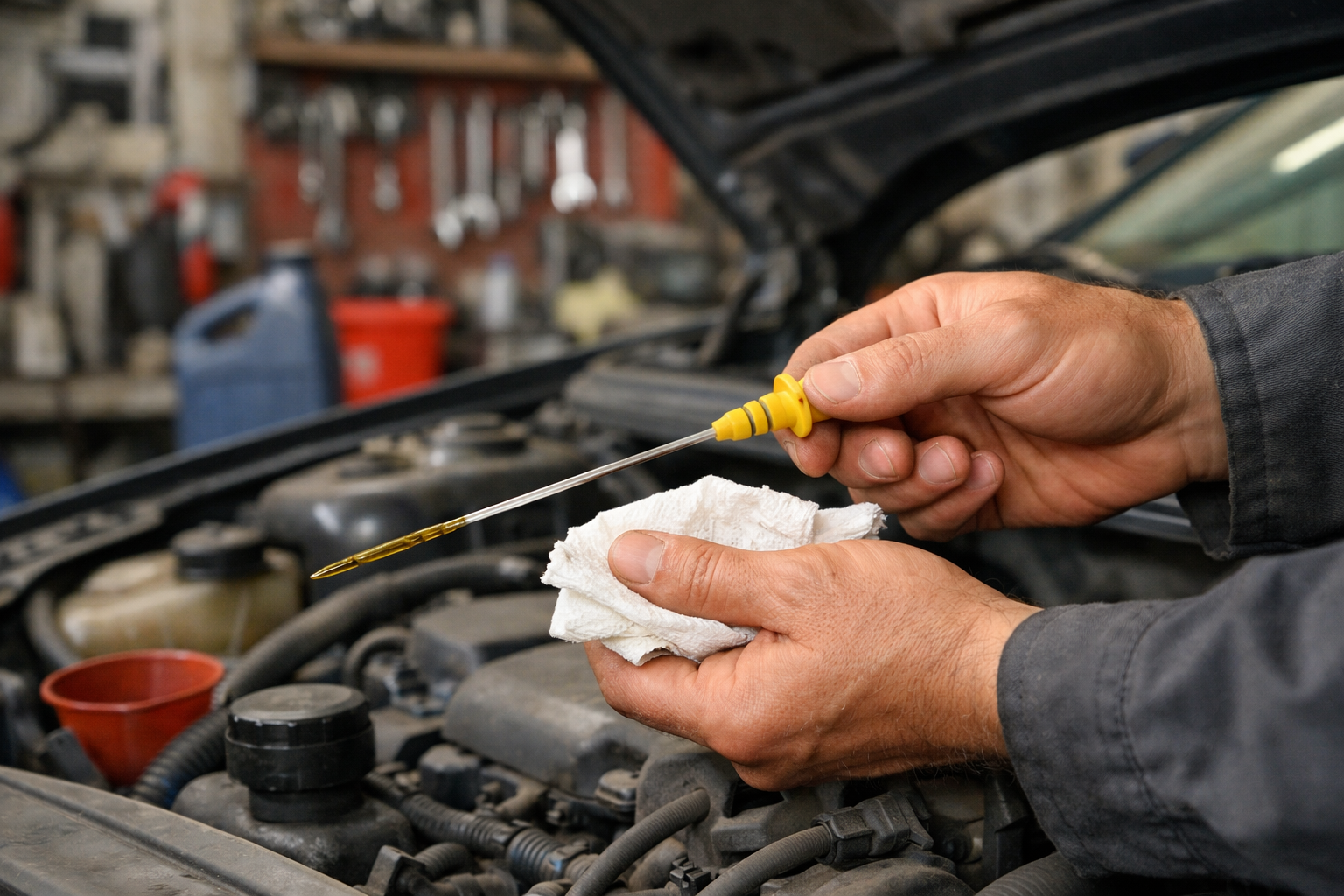
Intermediate tasks need basic tools and a bit of confidence. DIY oil changes are the classic example — $25 to $40 in supplies versus $50 to $90 at a quick-lube place. You need a jack, jack stands, a drain pan, and a couple of wrenches. My first oil change took 45 minutes. Now it takes 20. Spark plugs, tire rotations, and battery swaps fall in this category too.
- Beginner (5 min, no tools): Wiper blades, engine air filter, cabin air filter, headlight bulbs
- Intermediate (30 min, basic tools): Oil and filter change, spark plugs, battery replacement, tire rotation
- Advanced (1-2 hours, more tools): Brake pad replacement, serpentine belt, thermostat, oxygen sensors
- Leave it to the pros: Timing belt, transmission service, suspension work, engine diagnostics
Advanced tasks like brake pads require more tools and guts, but the savings are massive. A shop charges $150 to $300 per axle for brake pads. DIY? $30 to $60 in parts. The first time takes an hour or two. After that, you'll have it down to 45 minutes. Serpentine belts are another big saver — $20 to $40 in parts versus $100 to $200 at a shop.
Tool Investments That Pay for Themselves
You need to spend some money upfront on tools, but they pay for themselves faster than almost anything else I can think of. A floor jack and jack stands run $80 to $120. After two DIY oil changes, they've already paid for themselves compared to shop prices. And they'll last decades.
A basic socket set (metric and standard) costs $40 to $80 and handles most bolts you'll encounter. Add an oil filter wrench ($10), drain pan ($10), torque wrench ($30 to $50), and combination wrenches ($25 to $40). Total investment: about $200 to $300. It pays for itself within the first year and then saves you money every year after that.
Honestly, the best money I ever spent on my car was a $200 tool set and a Saturday afternoon watching YouTube. I've saved thousands in the past five years doing basic maintenance, and I actually understand how my car works now. That alone is worth it.
Maintenance Schedule Optimization
Your owner's manual has a maintenance schedule in it. Follow it. That's the baseline, and it's the most cost-effective approach. But here's the thing — a lot of dealerships and quick-lube shops push more frequent service than the manufacturer recommends. The classic move: "You need an oil change every 3,000 miles." Modern cars with synthetic oil? The manufacturer says 7,500 to 10,000 miles. That's a 3x cost difference if you fall for the 3,000-mile myth.
That said, if you're doing a lot of stop-and-go driving, towing, or driving in extreme heat or cold, check if your manual has a "severe duty" schedule. Most people driving highways in normal weather can stick to the standard schedule and save a lot.
Independent Mechanic vs Dealer Pricing
For stuff you don't want to do yourself, where you go makes a big difference. Independent mechanics typically charge 30 to 50 percent less than dealership service departments. Dealer labor rates run $120 to $180 per hour. A good independent shop? $80 to $120 per hour for the same quality work.
Dealers do win on warranty work, recall service, and complex brand-specific repairs. They've got manufacturer tools and tech bulletins that independents don't always have. But for oil changes, brake work, tire services, fluid flushes — any reputable independent shop does this just as well for a lot less. Ask friends and neighbors who they use. Check Google reviews. A good independent mechanic is worth their weight in gold.
The ROI of Preventive Maintenance
This is the part people don't want to hear, but it's the truth: every dollar you spend on preventive maintenance saves you $5 to $10 in repairs down the road. A $30 coolant flush prevents a $1,500 engine overheating disaster. A $200 timing belt replacement prevents a $3,000 to $5,000 engine rebuild. Regular $40 oil changes prevent the kind of engine wear that leads to a $4,000 engine replacement.
Cars that get consistent preventive care last 200,000 miles and beyond. Neglected cars start having major failures at 100,000 to 150,000 miles. That difference in lifespan could mean avoiding $50,000 to $100,000 in car replacement costs over your lifetime. Preventive maintenance is the best investment in car ownership. Period.
Tire Maintenance Savings
Tires are expensive to replace, so making them last is a big deal. Proper tire pressure alone improves fuel economy by up to 3 percent and extends tire life 10 to 15 percent. A $5 pressure gauge and 30 seconds of your time once a month. That's it. Rotating tires every 5,000 to 7,500 miles evens out wear and can extend their life by 20 percent or more.
- Check pressure monthly: Low pressure wears tires faster and burns more gas
- Rotate every 5,000-7,500 miles: Evens wear patterns, adds 20%+ to tire life
- Get aligned yearly: A $75 alignment prevents $200+ in premature tire wear
- Buy in sets of four: Retailers give meaningful per-tire discounts on full sets
- Shop online: Tire Rack and similar sites beat local pricing by 15 to 25 percent per tire
Seasonal Preparation Checklists
Before winter: check your battery (cold weather kills weak batteries faster than anything), test your antifreeze concentration, make sure the heater and defroster work, and think about winter tires if you get regular snow. Takes less than an hour and prevents expensive cold-weather breakdowns.
Before summer: look at your cooling system, check the A/C refrigerant, swap worn wiper blades before storm season, and top off all fluids. Summer heat destroys fluids faster and stresses cooling systems harder. A little prep now prevents a roadside emergency and a $200 tow bill later.
Key Takeaway
Budget car maintenance comes down to three things: learn the easy DIY tasks that save the most money, follow your manufacturer's schedule instead of over-servicing, and use a good independent mechanic for everything you can't do yourself. A $200 tool investment pays for itself in months. Preventive maintenance returns $5 to $10 for every $1 spent. And picking an independent shop over the dealer for routine work saves 30 to 50 percent on labor. Stack these habits together and you'll cut your annual maintenance costs by hundreds — while keeping your car running longer and better.